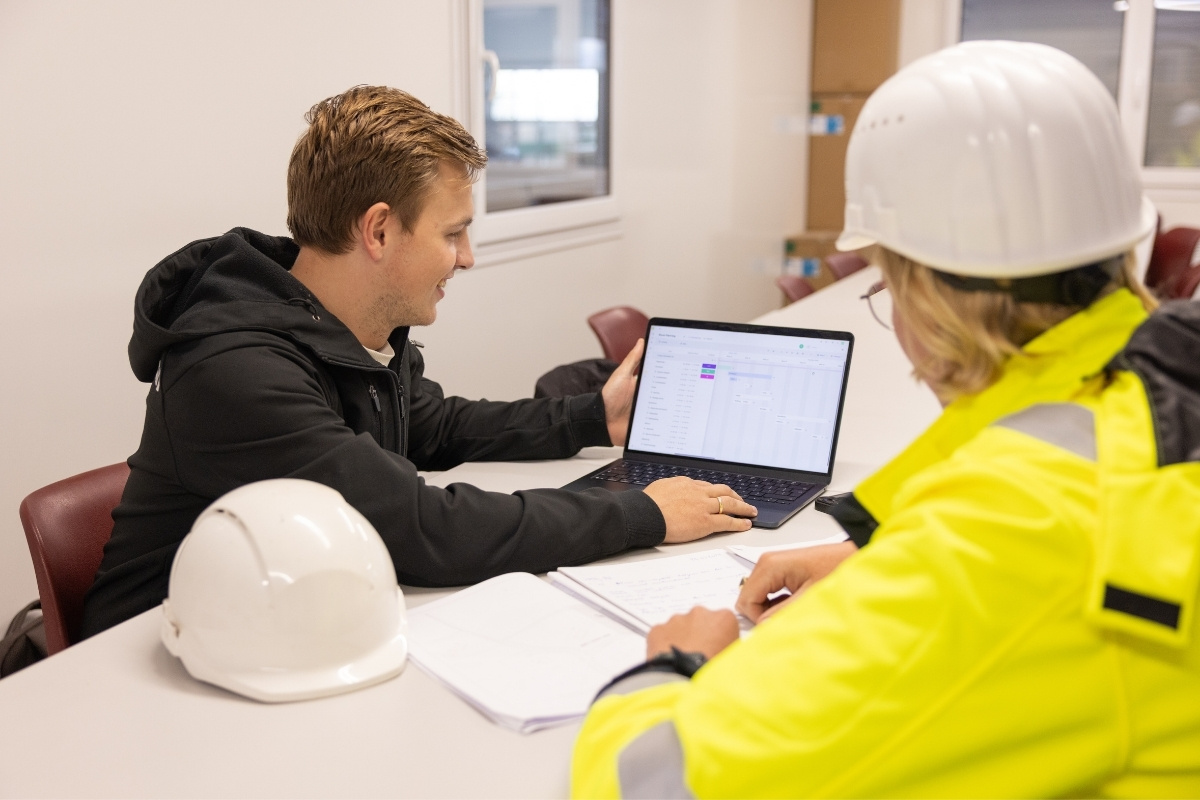
In the modern world, technology plays a crucial role in almost every sector, and field sales is no exception. Technology can help you make your field service more efficient, improve communication and take your business to the next level. Wondering how? We take a closer look at the challenges every field service industry faces and how you can solve them.
Challenges in field sales
Field service has unique challenges: scheduling problems, inefficient communication and unexpected changes can lead to lost time and higher costs. Moreover, planning is often not real-time and colleagues on the road cannot access the current schedule. People working in the field, such as mechanics, installers and painters, benefit from solutions that address these challenges and offer flexibility.
Efficient communication
With tools like vPlan, companies can easily schedule people, assign jobs and easily shift schedules when changes occur. Moreover, all information is updated in real time and, through our vPlan app, you can always access the latest version of the schedule. Wherever you are. This prevents miscommunications and ensures that your field service runs more efficiently.
Imagine you have a service and assembly company and you use vPlan. Planners can communicate directly with mechanics on site, make schedule changes and track progress. This ensures that everyone is on the same page, reducing the risk of errors and delays.
Real-time information and reporting
Modern scheduling tools offer real-time insights. Companies can track job progress, measure performance and react quickly to problems. This not only helps optimise daily assignments, but also provides valuable data for strategic decisions.
Other innovative technologies in field service
There are other technologies (on the way) that could completely transform the field service industry. We mention some examples:
1. Internet of Things (IoT)
The Internet of Things (IoT) refers to a network of physical devices connected via the internet and exchanging data. In the field, IoT devices can be used, for example, to monitor tools and machines. Think sensors that track the status of a machine and send maintenance notifications before problems arise. This not only helps prevent downtime, but also makes maintenance more efficient and cost-effective.
HVAC (heating, ventilation and air conditioning) companies can install IoT sensors in their systems to monitor performance and energy consumption. These sensors send real-time data to a central hub, allowing technicians to immediately see when a system is not performing optimally and plan preventive maintenance.
Our customer Sempergreen is already making smart use of this technology. Sensors in the irrigation systems monitor the perfect conditions of the (indoor) green facades. This way, Sempergreen does not have to come on site to check the plant walls - should maintenance be required, a notification automatically appears in their system in the office.
2. Augmented Reality (AR)
Augmented Reality (AR) is a technology that overlays digital information onto the physical world. In the field, technicians can use AR glasses to see manuals and technical information directly in front of their eyes while working. This increases efficiency and reduces the risk of errors, as technicians have instant access to the right information without having to search for a manual.
Imagine a technician who needs to repair a complex piece of equipment. With AR glasses, he can see step-by-step instructions and 3D models of the parts, significantly reducing repair time and increasing accuracy.
3. Drones
Drones are increasingly used in the field service industry for inspections and data collection. They can survey hard-to-reach areas, such as roofs or tall structures, and offer a safer and more efficient way to carry out these inspections.
Insurance companies use drones to inspect damage to buildings and infrastructure after a storm or other incident. This saves time and reduces risks for inspectors.
4. Artificial Intelligence (AI) and Machine Learning (ML)
AI and ML can be used to perform predictive analytics and improve operational decisions. By analysing historical data, these technologies can recognise patterns and make predictions about future needs, such as when equipment needs maintenance or when additional resources are needed.
Factories can use AI to analyse large amounts of data from machines and plan predictive maintenance. This helps prevent unexpected downtime and optimises productivity.
The future of the field service industry
The role of technology in field service is undeniably huge. By using advanced planning tools such as vPlan, innovative technologies such as IoT, AR, drones and AI, companies can increase efficiency, improve communication and be more responsive to their customers' needs. Applying these technologies in your processes will pay off in the long run. It might even become indispensable in the future.
So, whether you run an installation company, painting company or service company, exploring and applying these new technologies will help you take your field service to the next level!

Work at vPlan
We are looking for new colleagues.