What is Capacity Planning?
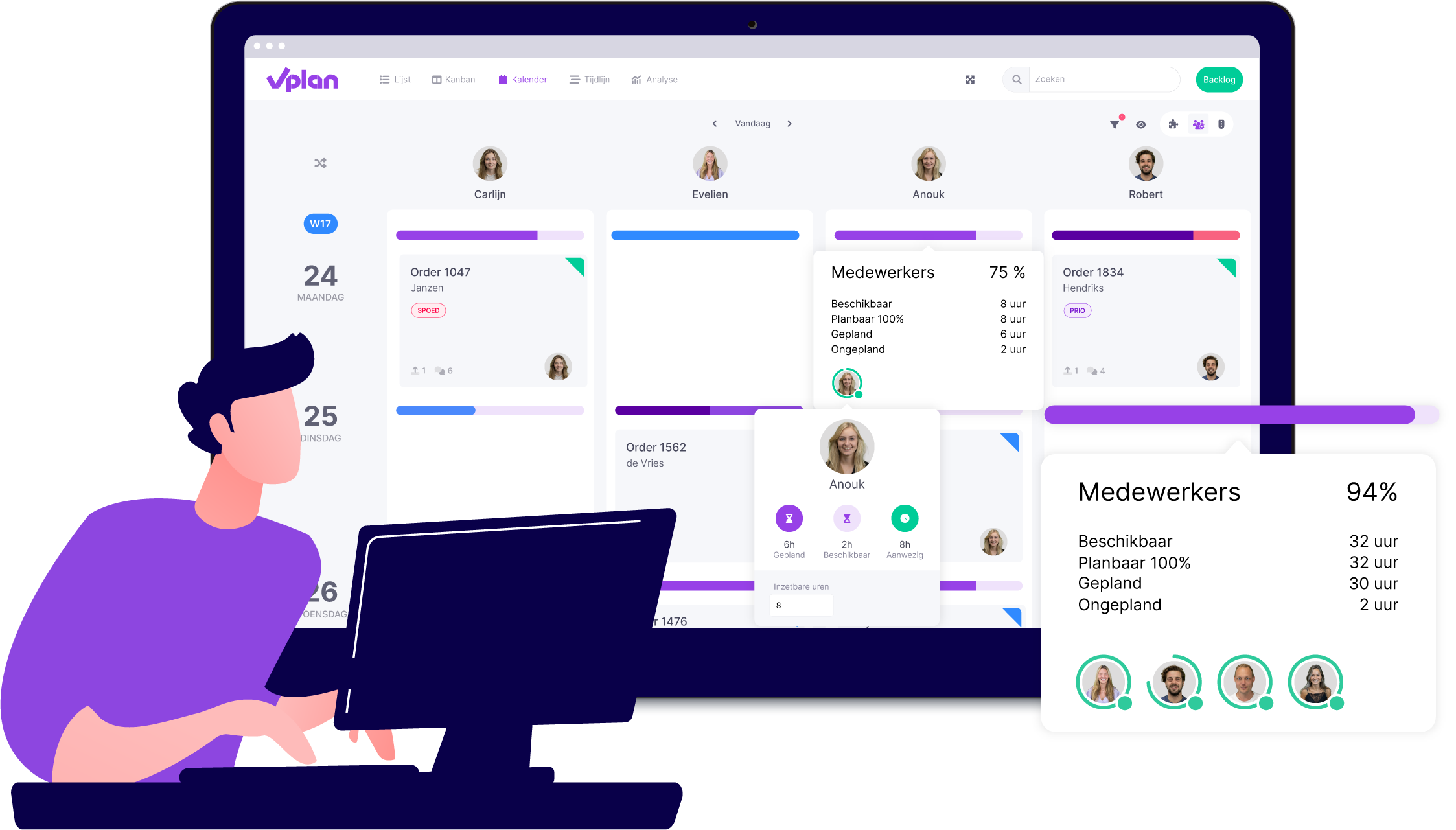
Capacity planning is the process by which an organisation determines how much capacity is needed. This includes personnel, machinery, and space. The aim is to meet the expected demand of customers.
Capacity is determined by the maximum production capacity that a company can achieve in a given period. The goal is to utilise available resources optimally without creating overcapacity or undercapacity.
Important aspects of Capacity Planning
- Taking leave and absence into account
Effective capacity planning considers the availability of staff, such as planned holidays and potential absenteeism due to illness. This helps to create realistic expectations and ensures that there is always enough capacity available. - Finite vs. Infinite capacity
In capacity planning, a distinction is often made between finite and infinite capacity. With finite capacity, there is a clear limit. Once capacity is full, the planning cannot be delayed without additional resources.
Infinite capacity assumes unlimited capacity. This means that planning can be deferred without additional resources. Many companies opt for a finite capacity model to create realistic and achievable plans.
- Capacity for machines, employees, and spaces
Capacity planning takes into account multiple types of resources, such as machine capacity, staff deployment, and available spaces. This allows for a clear overview of the total capacity of a business. It also enables the early identification of potential bottlenecks. - Competencies within capacity planning
In capacity planning, it is important to consider the skills of employees. This is particularly necessary when specific skills are required for certain tasks or projects. This prevents tasks from being assigned to employees who do not possess the appropriate skills, saving time and resources.
What is Resource Planning?
Resource planning specifically focuses on allocating and managing resources to carry out projects and daily operational tasks. This process determines what resources are available and what is needed.
It also shows how they can be best utilised. This helps to successfully achieve project goals and complete daily tasks.
Core components of resource planning
- Detailed allocation of resources
Resource planning examines more details than capacity planning. In resource planning, the exact requirements for each project or task are reviewed. This includes personnel, equipment, and necessary software, ensuring that projects can proceed without interruptions. - Flexible deployability
Resource planning enables quick adjustments to be made when the needs of a project change. This is particularly useful in project-driven environments, such as IT and construction, where the demand for specific resources can change rapidly. - Focus on project and task level
Resource planning is often a short-term process that focuses on the operational execution of daily tasks and projects. The primary goal is to ensure that the right resources are available at the right time.
Capacity Planning vs. Resource Planning: What is the Difference?
The differences between resource planning and capacity planning are often subtle but important. Here are the concrete differences outlined:
- Scale and focus
Capacity planning focuses on the overall picture of an organisation's operational capacity. It considers the availability of all resources: people, machines, and spaces. This allows for an assessment of whether the organisation can meet the expected demand.
Resource planning goes deeper and focuses on assigning specific resources to tasks or projects. It revolves around the availability and deployment of individuals or tools for concrete activities.
- Time horizon
Capacity planning often looks at a longer period, such as a quarter or a year. This helps maintain a clear overview of the available resources and assists in making strategic decisions regarding investments or staffing expansions.
Resource planning is typically viewed in the short term and flexibly deployed for daily tasks and projects. This helps to make resources available at the right time, which is important for the specific needs of the project.
- Approach and method
Capacity planning focuses on the maximum utilisation of a company's total capacity. It takes into account the limits of capacity, such as the maximum working hours of machines and employees. This determines the production capabilities.Resource planning primarily concerns the efficient allocation of capacity. It focuses on specific people or resources and how they are deployed. It is aimed at addressing the right gaps in skills, time, and materials for each project.
- Purpose
Capacity planning is often used in sectors where production capacity is crucial, such as in the manufacturing industry. Here, it is important that machines and personnel are well planned. This helps to meet customer demand.
Resource planning is common in sectors such as IT, consultancy, and events. In these fields, the right timing and the availability of team members and resources can determine the success of projects.
Examples
To better understand the difference between capacity planning and resource planning, we have described two situations below.
Capacity Planning
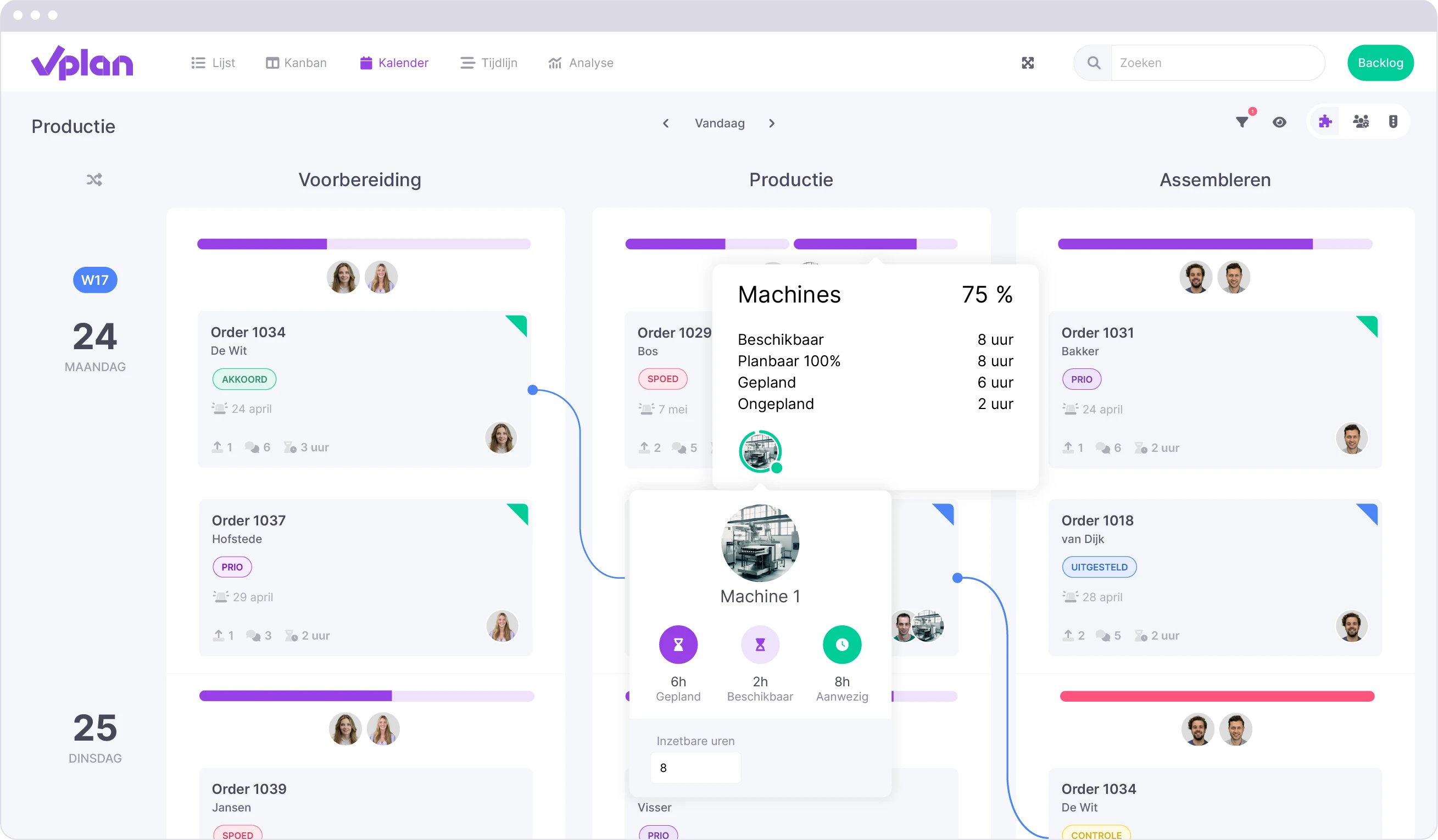
In a bicycle factory, for example, capacity planning is important. It involves the total production capacity needed to meet future demand. The production planner examines the maximum utilisation of machines, personnel, and maintenance schedules over a longer period.By planning this at a strategic level, they can better respond to busy months. They can optimise the deployment of personnel and machines, and also identify potential bottlenecks early on.
Capacity planning helps to effectively utilise the available resources, ensuring that the expected orders can be fulfilled without issues.
Resource Planning
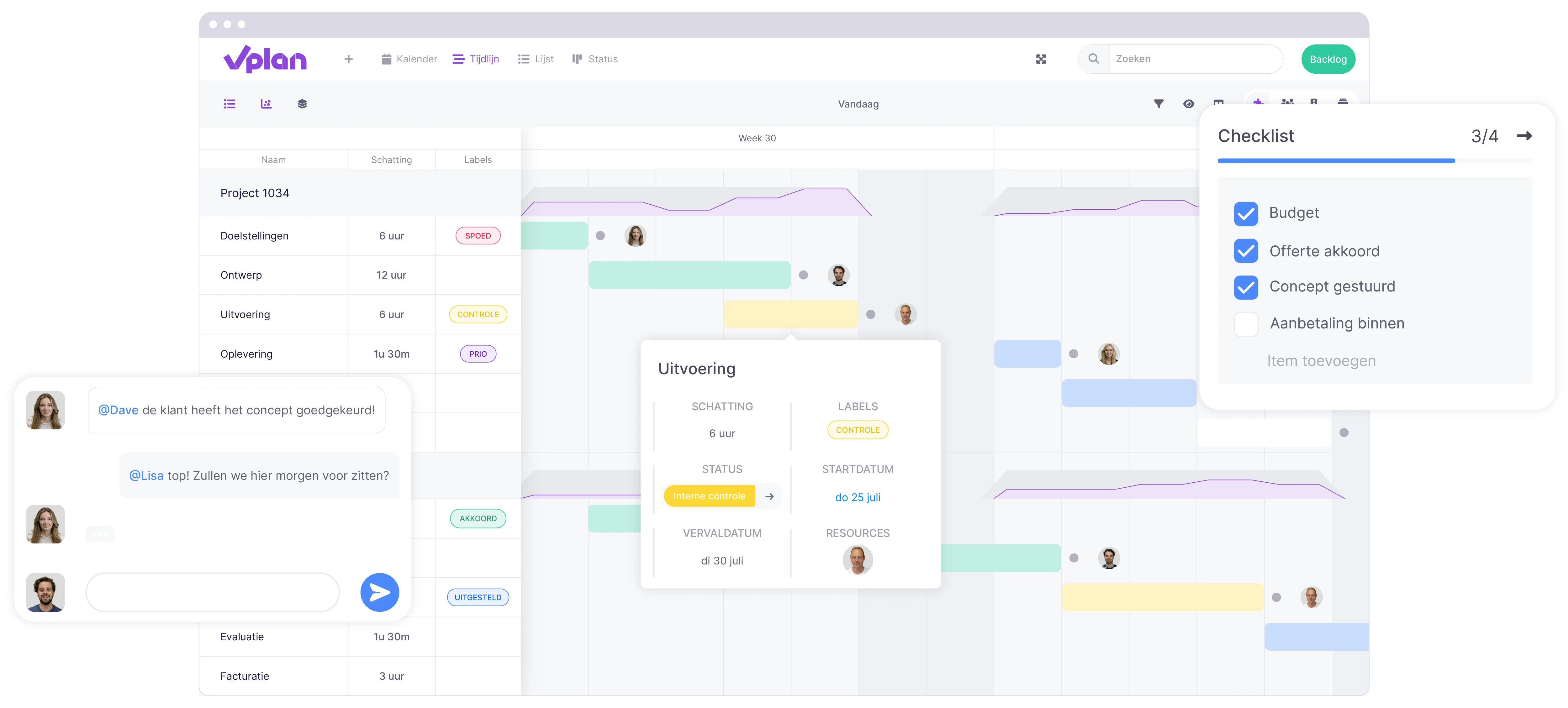
In a marketing agency, on the other hand, resource planning is crucial because each project requires unique and detailed resources. The project manager develops a plan that specifies which team members, tools, and budget are needed for the marketing campaign.
They adjust the daily deployment of their team based on the project's needs, ensuring that the work proceeds smoothly without delays or additional costs.
Resource planning helps to effectively utilise the available resources for a specific task, paying attention to the right timing and the level of detail required for each task.
Smart planning for strong business operations
Capacity planning and resource planning are crucial for business management. One provides an overview of overall capacity, while the other ensures the right team is in place at the right time. Whether you work in the manufacturing industry or in a project-driven environment like consultancy, a good balance between these two planning methods helps you work more efficiently and avoid surprises.
So, do you need a long-term strategy or a detailed plan for your next project? With the right allocation of capacity and resources, you can organise your business effectively, preparing you for any challenge.
By managing your resources smartly, you can always stay one step ahead, allowing you to better serve your customers. This leads to growth, efficiency, and success!

Work at vPlan
We are looking for new colleagues.