
What is a marketing calendar?
A marketing calendar is an overview in which all your marketing activities are planned. Think of:
- Social media posts
- Blogs and newsletters
- Marketing campaigns
- Events and promotions
You can see at a glance what you're doing, when it’s happening, and who is responsible. That makes planning easier and prevents surprises.
Why is a marketing calendar important?
Without a marketing calendar, teams often work ad hoc. That costs time and leads to mistakes. With a clear plan:
- You work more calmly and in a structured way
- You ensure a consistent message
- You maintain control over deadlines
- You can work more effectively on acquiring new customers
- Your marketing aligns better with other departments
A marketing calendar ensures that plans are actually carried out.
What should you include in a good marketing calendar?
A practical marketing calendar includes:
- The marketing activity
- Date or time period
- Channel (for example, social media or email)
- Responsible person
- Status
- Required time or capacity
This makes your own content planning clear and achievable.
Creating a marketing calendar in five simple steps
1. Define your goals
What do you want to achieve? More visibility, leads, or new customers?
2. Gather all marketing activities
List everything: campaigns, content, recurring tasks, and promotions.
3. Choose a time period
Work per month or per quarter, for example.
4. Assign tasks
Clearly indicate who is responsible for what.
5. Take capacity into account
Make sure you don’t plan more than your team can handle.
Marketing calendar in Excel, Outlook or a tool?
Many teams start with Excel. That works fine in the beginning, but quickly becomes unclear. Other teams use an Outlook calendar to plan marketing activities. That does provide dates, but lacks overview and cohesion.
Disadvantages of Excel and Outlook:
❌ No real-time insight
❌ Difficult to manage changes
❌ No visibility of overload or capacity
❌ Calendars show appointments, not marketing planning
Advantages of a tool like vPlan:
✅ One central marketing calendar
✅ Insight into available capacity
✅ Easily adjust when changes occur
✅ Better collaboration between teams
✅ Marketing planning instead of separate calendar appointments
👉 Read more here about how to use vPlan for your marketing department.
Combining marketing calendar and planning with vPlan
With vPlan, you don’t just plan marketing activities, you also see whether they are feasible. You combine your marketing calendar with resource planning.
That means:
- Less last-minute work
- Better task distribution
- Realistic deadlines
This way, you ensure that plans are actually carried out.
Practical example: how we use our own marketing calendar
At vPlan, we of course use our own software to plan our marketing activities. All campaigns, content, and promotions are placed into one central marketing planning. This way, the entire team always has insight into what is ongoing and what’s coming up.
We plan marketing activities directly based on time and available capacity. As a result, we can see in advance whether the planning is feasible and easily make adjustments if priorities change.
This is how it works in practice:
- One central plan for the entire marketing team.
- Insight into workload per team member.
- Clear planning of content, campaigns, and promotions.
- Peace and focus because everyone knows what they are working on.
The result: a clear and realistic marketing planning that is used daily and easily adapts to our goals.
Read this blog for a more detailed explanation of how the marketing team at vPlan uses vPlan.
Marketing calendar visually explained
See below different types of planning examples for marketing processes in vPlan, such as:
- Content planning
- To-do’s
- Long term: roadmap
Content planning:
In the content planning, you see in a calendar view which content is scheduled per day. You can filter by channel and immediately see who is responsible.

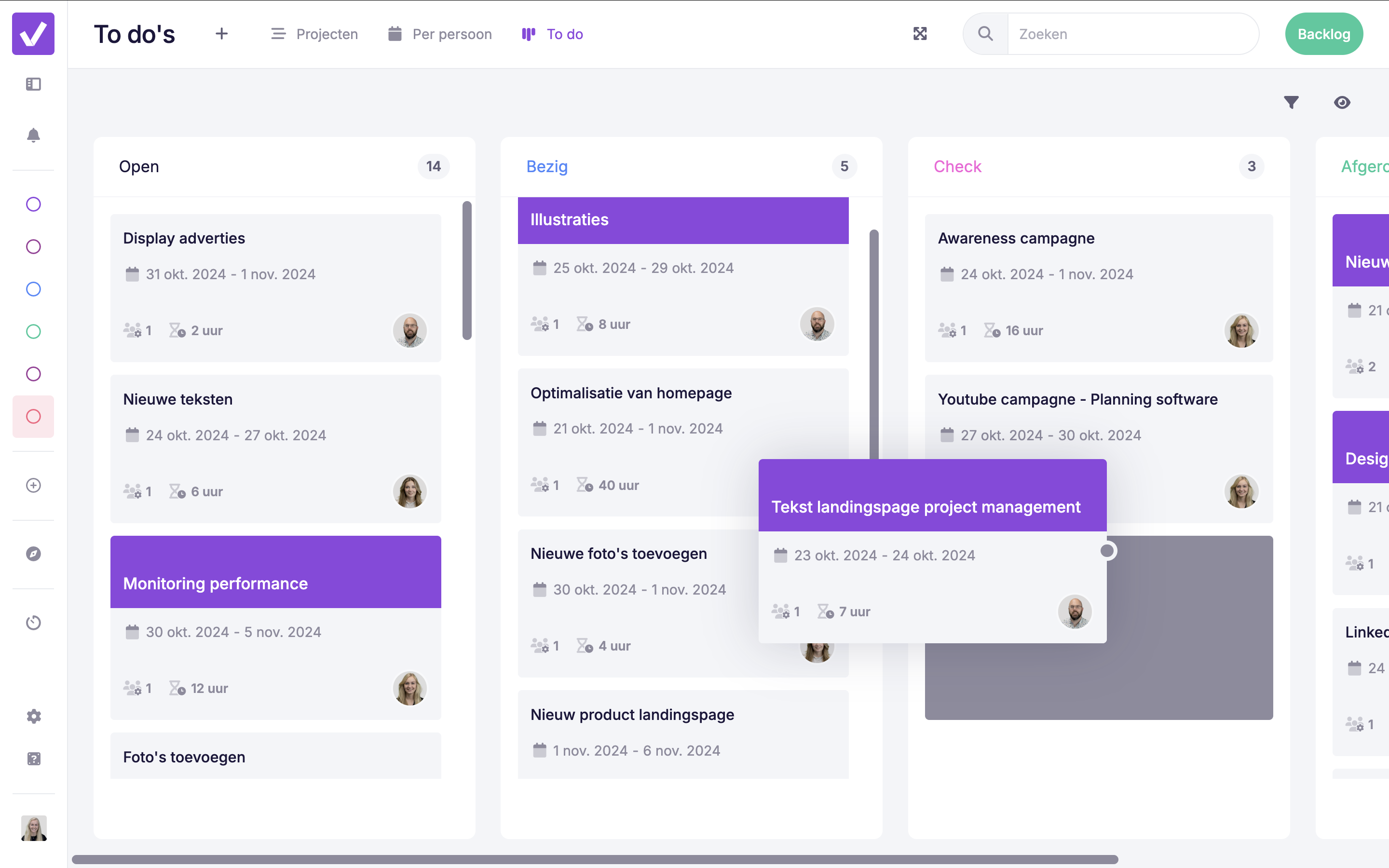
To-do's:
The to-do’s provide an overview of all marketing tasks, including checklists and status. You can view them per team or per person, always in connection with your planning.
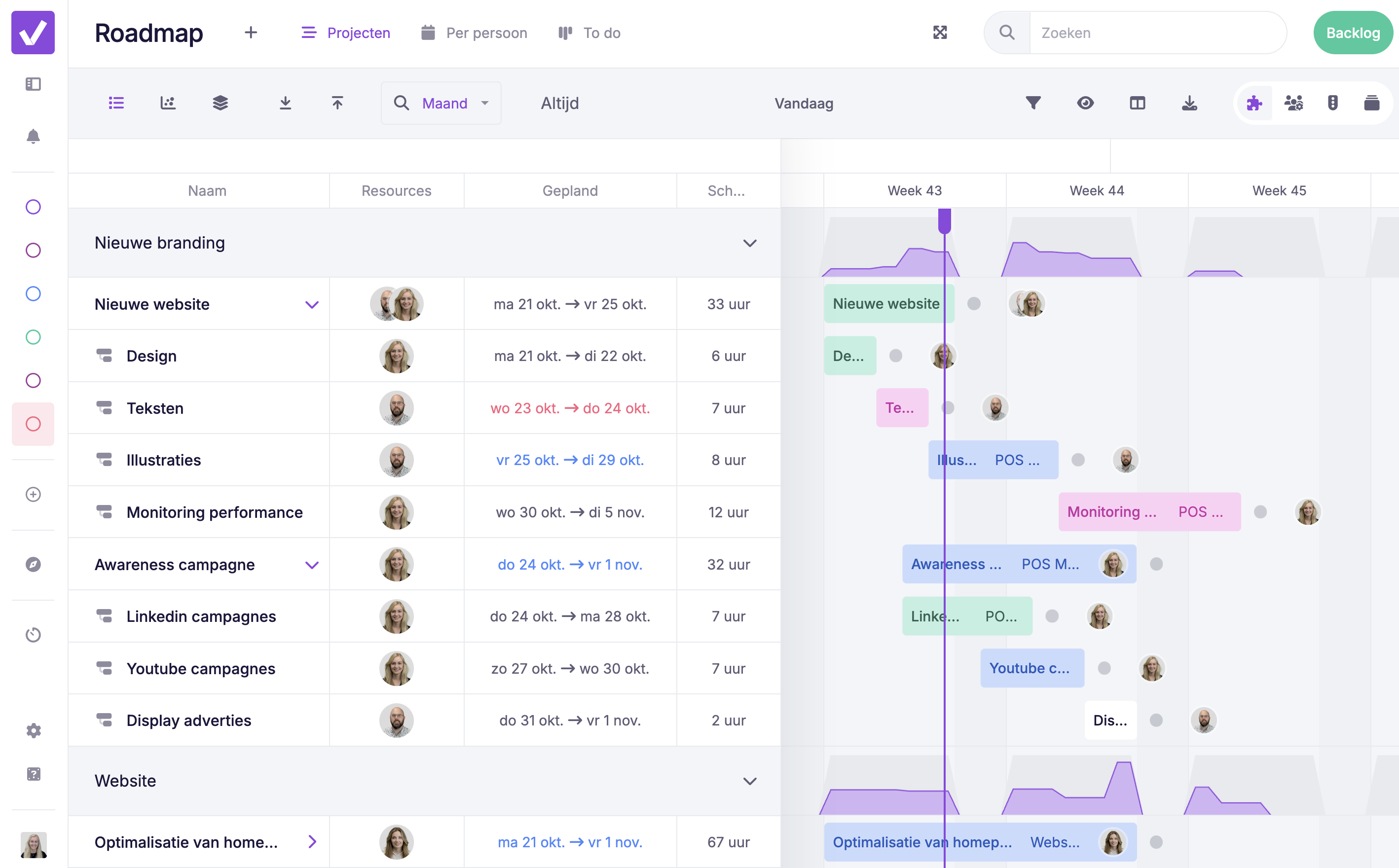
Long term: roadmap
The roadmap shows which marketing activities and campaigns are coming up in the longer term. This allows the marketing team to look ahead and prepare more effectively.
Overview and peace of mind in your marketing planning
A marketing calendar helps you work in a structured way, maintain an overview, and collaborate more effectively. By combining your marketing calendar with insight into capacity, you avoid stress and unachievable plans.
Frequently asked questions
What is a marketing schedule?
A marketing schedule is a plan that outlines when marketing activities will take place. It is similar to a marketing calendar but is often simpler and less visual. A marketing calendar is more detailed and is more commonly used for daily marketing planning.
What marketing tools are available?
There are many different marketing tools, depending on your goal:
- Tools for content planning
- Tools for social media management
- Tools for email marketing
- Tools for marketing automation
- Tools for planning and capacity, such as vPlan
By combining tools smartly, you work more efficiently and maintain better overview.
What is the difference between a marketing calendar and a content calendar?
A content calendar focuses solely on content, such as blogs and social media. A marketing calendar is broader and also includes campaigns, advertisements, events, and promotions.
Can I create a marketing calendar in Excel?
Yes, you can. For small teams, Excel works fine. As you grow, it becomes more difficult to maintain overview and make changes. A planning tool then offers more insight and flexibility.
Why is insight into capacity important in a marketing calendar?
Without insight into capacity, you often end up planning too much. By including capacity in your marketing calendar, you prevent overload and keep your planning achievable.
How often should you update a marketing calendar?
Ideally, you should update your marketing calendar continuously. When priorities or plans change, adjust it immediately so that everyone is working with the same information.
What are the benefits of working with a marketing calendar?
A good marketing calendar provides more overview, less stress, and better collaboration. Teams work with more focus and stay concentrated on what truly matters.

Work at vPlan
We are looking for new colleagues.